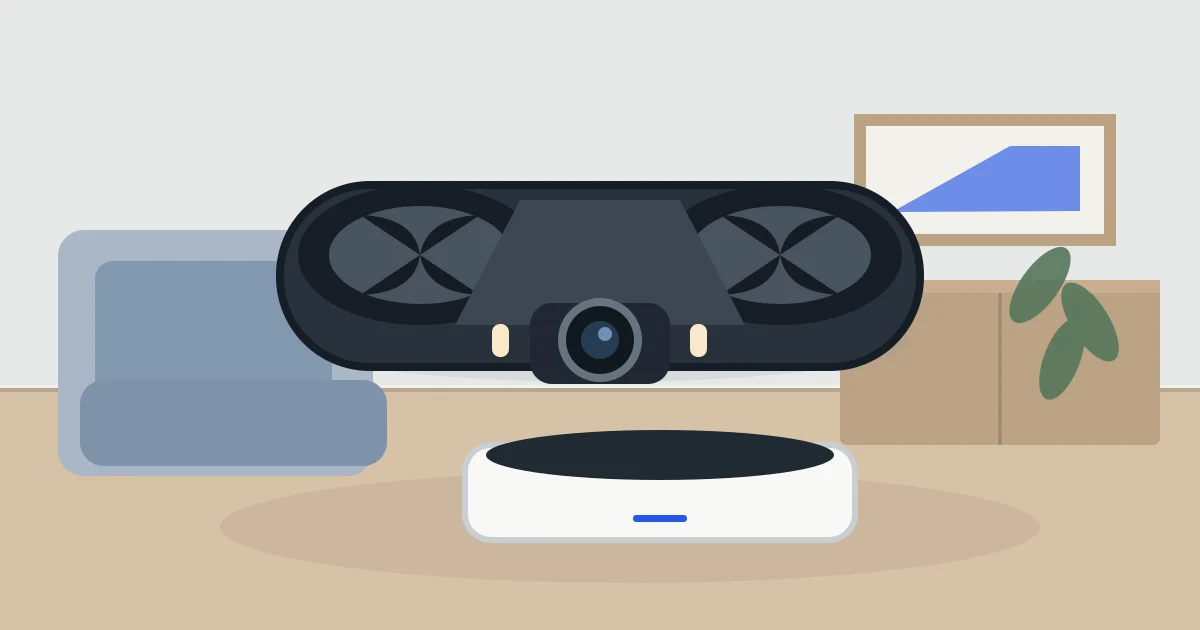
Ring wants to put a flying camera inside your house. And after six years of trying, the Amazon-owned company says it's finally ready.
The new Ring Drone Cam, announced on 10 November, is designed to fly around your home while you're away, checking rooms and investigating alerts from other Ring devices.
It's due to start shipping in the US on 27 January 2027 for $249.99. There's no confirmed UK launch date yet.
Why would you want a flying camera?
Imagine you're away for the weekend and your security system detects movement near the back door.
Instead of switching between several fixed cameras, you could send one flying camera to investigate.
Ring's drone uses a system called AI Pilot to map your home, plan routes and navigate around furniture. You can schedule patrols, launch one manually or have it respond automatically when a connected Ring sensor is triggered.
It records 2K video, has built-in lights for darker rooms and returns to a charging dock when it's finished.
The idea is that one moving camera could cover areas that would otherwise need several cameras.
There's a catch. Several, actually.
The Drone Cam can fly for up to eight minutes on a full battery. That's enough for a quick inspection, but hardly continuous security coverage.
It also relies on Wi-Fi and cloud processing for its autonomous navigation. If your internet connection goes down, much of its functionality goes with it.
And then there's the noise. Early demonstrations suggest it's noticeably loud, which might be reassuring if you want to scare off an intruder, but less appealing if you've got pets at home.
It's also currently designed for a single floor, so don't expect it to fly upstairs to check whether you've left a window open.
What about privacy?
Having cameras inside your home is already a personal decision. Giving one the ability to move around adds another dimension.
Ring says the drone's camera is physically covered and switched off while docked, and it only records during flights.
The company also uses a new encryption system called Throw Away the Key, designed to limit access to recorded footage.
Those are useful safeguards, although the reliance on cloud processing raises questions about how much information about your home's layout and activity needs to leave the device.
Clever idea or unnecessary gadget?
What's interesting is that Ring first announced a flying home camera back in 2020. That version never reached general sale.
The new model is smaller, lighter and uses AI-assisted navigation to address some of the engineering challenges that held the original back.
The appeal of checking a whole house without installing cameras everywhere is easy to see.
But whether that convenience outweighs the noise, limited flight time and privacy considerations is another question.
For now, it's a fascinating example of how home security is moving beyond cameras that simply sit and watch.
Although not everyone will be ready for a tiny drone patrolling their living room.
Sources
Every fact in this article comes from one of these.